
Ateliers for Research and Creation (ARC)
ARC Archives of What, Archives Why?
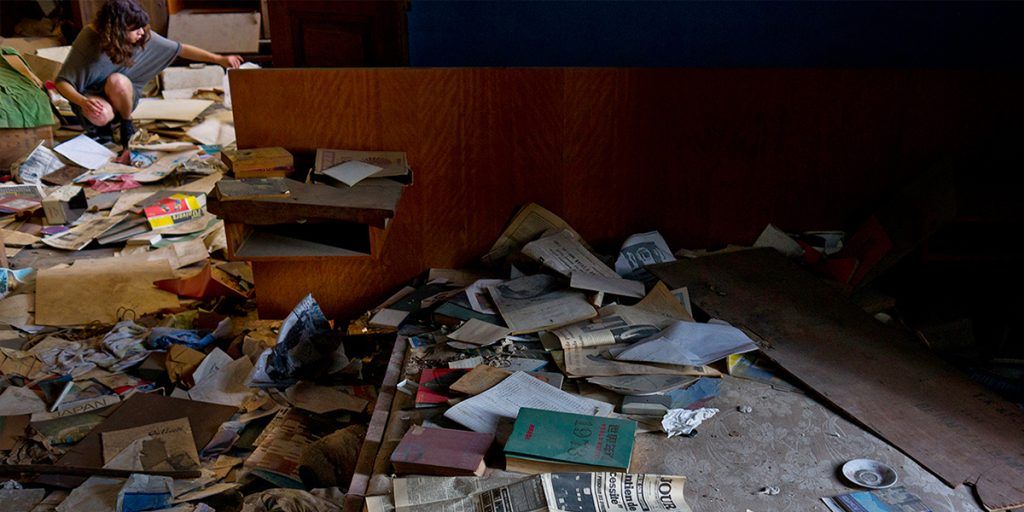
Atelier for Research and Creation
Code: ARC1043-1
Lead teacher-researcher
Gregory Buchakjian, PhD
gbuchakjian@alba.edu.lb
Start date: September 2024
Description
Archives have been at the heart of the concerns of artists and researchers in Lebanon since the 1990s. They come in all kinds of forms – paper, audiovisual, oral – and concern the whole range of human activity. Hence the importance of their place in societies weakened by conflict, at an uncertain time when familiar landmarks are being lost. Every archive, whatever its subject, scale and materiality, refers to temporal and spatial points of reference.
Even when it is historically, geographically and perhaps even familially close to us, an archive remains foreign to us. This otherness allows the researcher and the artist to approach it as an object, a symptom and a subject of study.
The scientific and artistic communities consider that bringing archives to light and presenting them to the public helps to fill the gaps in the construction of a collective narrative. Until proven otherwise, the uses of archives would appear to be a valid strategy for restoring the threads of time.
Context
Archives have been at the heart of the concerns of artists and researchers in Lebanon since the 1990s. They play a central role in the practice of the initiator of this atelier, notably in his doctoral thesis and in the artistic project on the abandoned dwellings of Beirut. Archives come in all kinds of forms – paper, audiovisual, oral – and concern the whole range of human activity. Hence their importance in societies weakened by conflict, at an uncertain time when familiar landmarks are being lost.
Research questions
What are the different possible forms of interaction between archives and artistic approaches? Beyond the best-known, most published and most publicised ones, the aim is to establish typologies. What types of archives – institutional, family, etc. – and what types of media? How has the situation evolved since archives became, at the end of the 1990s, a link in the chain of art in Lebanon?
Research problem
Every archive, whatever its subject, scale and materiality, refers to temporal and spatial points of reference. Even when it is historically, geographically and perhaps even familially close to us, it remains foreign to us. This otherness allows the researcher and the artist to approach it as an object, a symptom and a subject of study.
And yet every archive teaches us something about ourselves. Whether its contents are early twentieth-century music recordings (such as those of the Arab Music Archiving and Reasearch Foundation), topographic surveys by civil engineers, correspondence, photographs, films or anything else, it reveals one aspect – always fragmentary – of our collective memory. The result is a writing of history that is not linear but proceeds in fits and starts, in which the pieces accumulate, and sometimes fit together, in an endless construction.
Thirty years after the emergence of practices that draw on them, what can archives still do?
Research hypothesis
Given that “the never completed, never wholly achieved uncovering of the archive forms the general horizon to which the description of discursive formations, the analysis of positivities, and the mapping of the enunciative field belong” (M. Foucault, L’archéologie du savoir), the subject studied is a kind of chimera, since it can never be completed. All the more so in a territory where narratives, documents and places are fragmented.
The scientific and artistic communities nevertheless consider that bringing various archives to light and presenting them to the public helps to fill the gaps in the construction of a collective narrative. Witness the considerable number of publications, conferences, films and works produced over the last decades. Until proven otherwise, the uses of archives would appear to be a valid strategy for restoring the threads of time.
Justification of the hypothesis
Asked to “define a research problem on archives and art in Lebanon”, ChatGPT answers: “The research problem on archives and art in Lebanon concerns the exploration of historical and artistic archives in the Lebanese context. It aims to understand how archives are used in artistic creation, as well as their role in preserving collective memory and constructing national identity. This problem also examines the challenges of preserving archives in a context marked by conflict and social transformation, as well as the artistic strategies used to reinterpret and reinvent the past through contemporary works of art. In addition, it questions the way in which Lebanese artists address issues of memory, trauma and cultural heritage through their artistic practice, and how these representations contribute to the understanding and construction of Lebanese history and identity.”
The questions raised by archives in Lebanon are so self-evident that they are recorded in databases. The theoretical aim of this atelier is to question, and even deconstruct, through the examination of specific collections, whether unpublished or already known, the relevance of what has become a received idea, if not a truth.
Data collection methods
- Establish a corpus of private and/or institutional collections that will be the object of study.
- General survey of the collections through interviews with the rights holders, the gathering of any bibliographic references on the specific subject and a general observation of the content.
- Preliminary inventory of the collections
Data analysis
- Once the corpus has been established and catalogued, the task is to activate it.
- What regime does this archive belong to?
- What questions does its materiality raise?
- What kinds of individual or collective narratives does it bring to light?
Assessment
- Attendance
- Following the CRC lecture series
- Fieldwork and preliminary inventory of a corpus
- Final project
References
Books
- BARBERIS, Isabelle (ed.) (2015). L’archive dans les arts vivants : performance, danse, théâtre [actes du colloque Archive vivante, Paris, Université Paris Diderot, 25-26 octobre 2012]. Rennes : Presses Universitaires de Rennes, 213 p. ALBA 790.2072 B234a
- BASSIL, Karl, MAASRI, Zeina et ZAATARI, Akram (2002). Mapping Sitting: on Portraiture and Photography, Beyrouth, Mind the Gap, [ALBA: 778.92 B321m]
- BUCHAKJIAN, Gregory (2018). Habitats abandonnés. Une histoire de Beyrouth. Beyrouth, Kaph, 239 p. ALBA 779.092 B918h
- BUCHAKJIAN, Gregory, ELKOURY, Fouad et KHADER, Manal, Fouad Elkoury. Passing Time, Beyrouth, Kaph Books, 2017, 280 p. [ALBA 779.9256925 K45p]
- BUCHAKJIAN, Gregory et COTTARD HACHEM, Clémence, ed. (2018). Traversées photographiques, le journal du Docteur Cottard, Beyrouth, Fondation arabe pour l’image, 250 p. [ALBA 770.92 B918t]
- COSTANTINI, Marco (ed.) (2022). Beyrouth : les temps du design. Lausanne, mudac, 304 p. [ALBA 745.4095692 B573b]
- COTTARD HACHEM, Clémence et SALAME, Nour, ed. (2018), On Photography in Lebanon. Stories and Essays, Beyrouth, Kaph Books [ALBA 779.95692 C846s]
- DERRIDA, Jacques (1995). Mal d’archive, Paris, Galilée, 168 p.
- DIDI-HUBERMAN, Georges (2002). L’Image survivante : histoire de l’art et temps des fantômes selon Aby Warburg. Paris : Editions de Minuit, 592 p. ALBA 701.17 D556i
- FOUCAULT, Michel (1969). L’Archéologie du savoir, Paris, Gallimard, coll. « Bibliothèque des sciences humaines », 287 p.
- GUYOT, Jacques et ROLLAND, Thierry (2011). Les archives audiovisuelles : histoire, culture, politique. Paris, Armand Colin, 191 p. ALBA 791.4309 G989a
- MEJCHER-ATASSI, Sonja et SCHWARTZ, John Pedro (ed.) (2012). Archives, Museums and Collecting Practices in the Modern Arab World, Farnham, Surrey : Ashgate publishing company, 234 p. [ALBA : 025.281 M516a]
- MEREWETHER, Charles (ed.) (2006). The Archive. Londres, Whitechapel, 207 p. ALBA 027.0071 M558a
- TAMRAZ, Nayla. (ed.) (2015) Littérature, art et monde contemporain. Récits, histoire, mémoire [Actes du colloque organisé par le Département des lettres françaises et le Master en critique d’art et curatoriat de l’Université Saint‐Joseph à Beyrouth les 16 et 17 mai 2014]. Beyrouth : Presses de l’Université Saint-Joseph, 290 p. [ALBA : 701.17 T153l]
- ZAATARI, Akram (ed.) (2018). Against Photography, an annotated history of the Arab Image Foundation, Barcelone,
- MACBA et Beyrouth, Kaph Books, 188 p. ALBA 770.92 Z11e
- ZAATARI, Akram et WASIUTA, Mark (ed.) (2018) Rifat Chadirji : building Index, Beyrouth, Kaph, 437 p. ALBA 720.92 C432r
Articles
- AVENTURIN, Annabelle et MORIN, Léa (2022). « Des Archives cinématographiques non-alignées ». Hors Champ, janv-fev. 2022. Online https://horschamp.qc.ca/article/des-archives-cinematographiques-non-alignees
- BAUMANN, Stefanie (2009), « Archiver ce qui aurait pu avoir lieu », Conserveries mémorielles #6 [Online] http://journals.openedition.org/cm/381
_ (2012), « Archiver ailleurs, archiver autrement ? », Ateliers d’anthropologie, n. 36 [Online] http://journals.openedition.org/ateliers/9013 - BUCHAKJIAN, Gregory (2017). « The Lives and Deaths of Inhabitants in Abandoned Houses ». OAR Oxford Artistic and Practice Based Research Platform, n. 2, p. 30-46. Online https://www.oarplatform.com/lives-deaths-inhabitants-abandoned-houses/
- DIDI-HUBERMAN Georges (2024) « Retraverser l’archive (deux notes pour un projet d’atlas) », Critique d’art, 60 | Printemps/été. Online: http://journals.openedition.org/critiquedart/104430 ; DOI : https://doi.org/10.4000/critiquedart.104430
- FOSTER, Hal (2004). « An Archival Impulse », October, n. 110, p. 3-22 Online: https://monoskop.org/images/6/6b/Foster_Hal_2004_An_Archival_Impulse.pdf
- OUAYDA, Nour et SAYEGH, Ghada (2022). « Circuler dans les archives du cinéma : rencontres, gestes et affectivités », Hors Champ, janv-fev. 2022. Online: https://horschamp.qc.ca/article/circuler-dans-les-archives-du-cinema-rencontres-gestes-et-affectivites
Summary of previous studies
The productions of the last thirty years, especially those crossing artistic and scientific practices, have used archives to highlight history, or certain histories. This is obviously the case of the Arab Image Foundation and its publications, as well as of various projects initiated by individual, collective or institutional entities, such as the Abandoned Dwellings project I launched in 2009.
Gaps in the references with regard to the present project
Relatively recent archives: most of the work concerns archives predating the 1990s. Yet the last 30 years have generated material that is now part of history.
Classification systems: archives are held in institutions or by private individuals. What scope is there for establishing classification systems that allow different types of collections to be cross-referenced?
Language of instruction
- French
- English (if needed)
Breakdown of hours
- On-site teaching/research hours = 30 hours
- Independent work = 80 hours
Group size
- Ten first-year Master’s students
Facilitators
The following people may be invited as facilitators or lecturers, depending on the ARC schedule and their availability:
- Vartan Avakian, artist, Arab Image Foundation
- Rowina Bou-Harb, librarian and archivist, Sursock Museum
- Georges Boustany, creator of the page La guerre du Liban au jour le jour and author of the book Avant d’oublier
- Carine Chelhot Lemyre, art historian, Alba UOB
- Clémence Cottard-Hachem, artistic director, BEMA
- Lina Fakhoury, archivist, Alba UOB
- Marianne Noujeim, associate professor, USJ
- Anaïs Farine, film studies researcher, USJ
- Joana Hadjithomas and Khalil Joreige, visual artists and filmmakers
- Lamia Joreige, visual artist
- Nathalie Rosa-Bucher, archivist, Umam D&R
- Ghada Sayegh, associate professor, USJ
- Alfred Tarazi, visual artist
- Camille Tarazi, architect, director of Maison Tarazi and author of the book Vitrine de L’Orient
- Akram Zaatari, visual artist, Arab Image Foundation