Centre for
Research and
Creation

Ateliers for Research and Creation (ARC)

Presentation

Created in collaboration with the Office of Academic Affairs, the Ateliers for Research and Creation (ARC) constitute the CRC’s teaching branch, since they form part of the students’ curriculum. Each ARC of the CRC addresses a specific theme that takes into account the CRC’s overall research and creation focus. Within the ARCs are the Research and Creation Directors, who hold doctorates, the facilitators, the lecturers and the students.

The Research and Creation Directors guide the enrolled students in carrying out their research and creation projects. The ARCs host lecturers and facilitators who lead a project (atelier) for a specific period during the semester.

Each Atelier for Research and Creation (ARC) of the CRC is equivalent to 4 credits at ALBA in the LMD (Bachelor–Master–Doctorate) system. These credits are earned at the end of each semester spent at the CRC, in accordance with the credit requirements in force.

Who?

The Research and Creation Directors: they hold a doctorate. A list of the Research and Creation Directors is made available to the public and will be updated regularly. The DRCs design the content of their ARC and write a research and creation brief. The Research and Creation Directors put forward the names of the facilitators and/or lecturers for their ARC.

The lecturers: they do not necessarily hold a doctorate. They give lectures within the ARCs on the overall theme of the CRC and, in particular, of the ARC concerned. They are ALBA teachers or external lecturers. The many lectures given within the ARCs form a lecture series open to everyone enrolled in the ARCs.

The facilitators: they do not necessarily hold a doctorate. They are invited to the ARCs to lead a project (atelier) for a specific period during the semester. They are ALBA teachers or external facilitators.

The students: these are students from ALBA’s schools who are enrolled in an ARC.

How it works

First-year students in the Master’s programme may enrol in one of the CRC’s ARCs.

Step 1 – Administrative registration: Administrative registration takes place at the ALBA secretariat during the stated opening hours.

Step 2 – Research and creation: Once enrolled, the student benefits from the CRC’s technical facilities and its theoretical and practical supervision for one renewable semester. During this semester, the student gets in touch with their Research and Creation Director for follow-up within the ARC concerned. Throughout the semester, each student receives follow-up in a variety of forms, such as:
- Personalised follow-up with the Research and Creation Director of the ARC concerned;
- Sessions led by Lebanese and/or foreign facilitators;
- A lecture series.

Step 3 – Presentation of the project before the jury: In order to validate the credits, the student must meet the following conditions: attend the chosen ARC regularly and obtain the jury’s validation of the work required throughout the semester. At the end of the semester, with the approval of the Research and Creation Director, the student appears before the CRC jury. They submit to the members of the jury a report detailing their research and creations, for the jury members to study before the defence/presentation. Following this defence/presentation, the jury will decide whether or not to grant its official approval, a necessary condition for the validation of the credits and the award of a certificate.

Learning outcomes

  • Identify the main concepts and theories related to the subject addressed;
  • Critically interpret relevant works and documents;
  • Evaluate the different perspectives and approaches related to the field of research;
  • Analyse complex issues related to the subject;
  • Solve practical problems by applying the knowledge acquired during the ARC;
  • Design innovative and creative solutions by integrating the concepts acquired;
  • Plan and organise projects using acquired skills;
  • Produce practical work demonstrating mastery of the skills acquired;
  • Produce high-quality reports or presentations, using clear and effective communication;
  • Apply the skills acquired in professional contexts relevant to the field of research.

Duration

The unit of measurement for the ARCs is the semester. Nevertheless, administrative re-registration each semester, in accordance with ALBA’s calendar, is possible. Within the semester, each ARC involves 3 contact hours per week, for a total of 30 hours.

ECTS credits

Each Atelier for Research and Creation (ARC) of the CRC is equivalent to 4 (ECTS) credits at ALBA in the LMD (Bachelor–Master–Doctorate) system. These credits are earned at the end of each semester spent at the CRC, in accordance with the credit requirements in force.

Certificate

On request, the candidate may obtain a certificate stating the length of their participation as a student at the CRC, the ARC attended, the approval of their submitted work by the DRC and by the CRC jury, and the number of credits awarded by the CRC per semester.

The Ateliers for Research and Creation

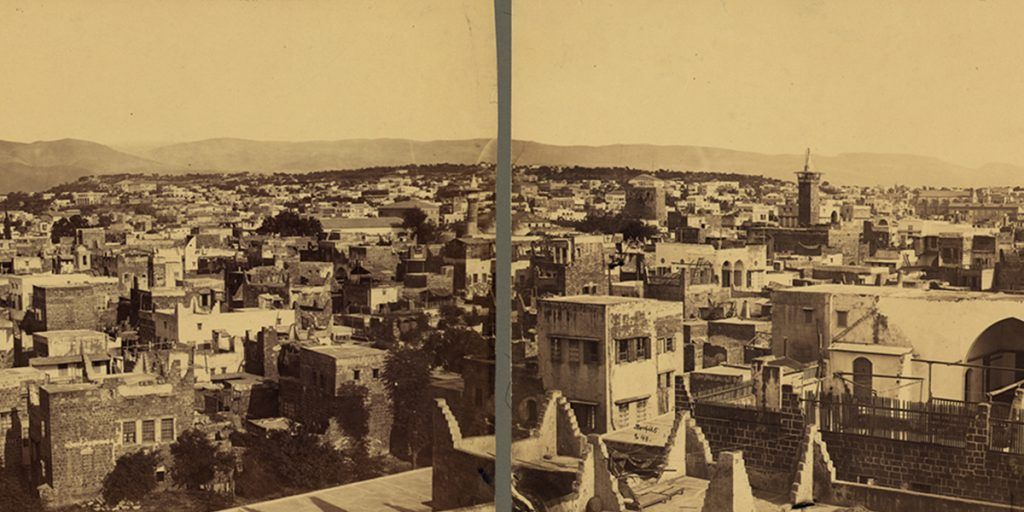
Photo taken by the Maison Bonfils between 1867 and 1899, from the Library of Congress, Washington: https://www.loc.gov/pictures/item/2004668095/

ARC Photography and Visual Formats in Lebanon

From September 2024

Directed by Carine Chelhot Lemyre, PhD

Semesters: 2024-2025. Semester 1 · 2024-2025. Semester 2 · 2025-2026. Semester 1 · 2025-2026. Semester 2 · 2026-2027. Semester 1

The study and interpretation of photography in the Middle East and North Africa (or what was then the Ottoman Empire) is a developing field for tracing the history of the European photographers who “explored” the region, as well as of those who chose to set up local studios. While recent research has been published on a number of them, the history of a significant proportion of the French studios established in Lebanon, and of other local ones, remains undocumented. This atelier aims to address the main historical, conceptual, theoretical and aesthetic questions that inform the history of photography in the Middle East and in Lebanon from the medium’s beginnings in the mid-19th century to the early 20th century. Let us explore the photographic materials of these studios and analyse how the content of these photographic illustrations interacted with their viewers depending on the format in which they were produced. The atelier will include visits to local archives such as the Fouad Debbas Collection at the Nicolas Ibrahim Sursock Museum. Students’ written assignments will be based on photographic material consulted in person in these archives. This atelier would be of interest to all Master’s students with a particular interest in photography, the history of visual technologies, modes of viewing and photographic formats of the late 19th and early 20th centuries. As we live in a hyper-visualised world, it is always worth reflecting on the history of image production and on the ways in which images were disseminated, sold and received by various audiences.

Atelier for Research and CreationFind out more

ARC Memory, Nostalgia and Imagination in the Suburbs of Beirut

From September 2026

Directed by Michael F. Davie, PhD

Semesters: 2026-2027. Semester 1

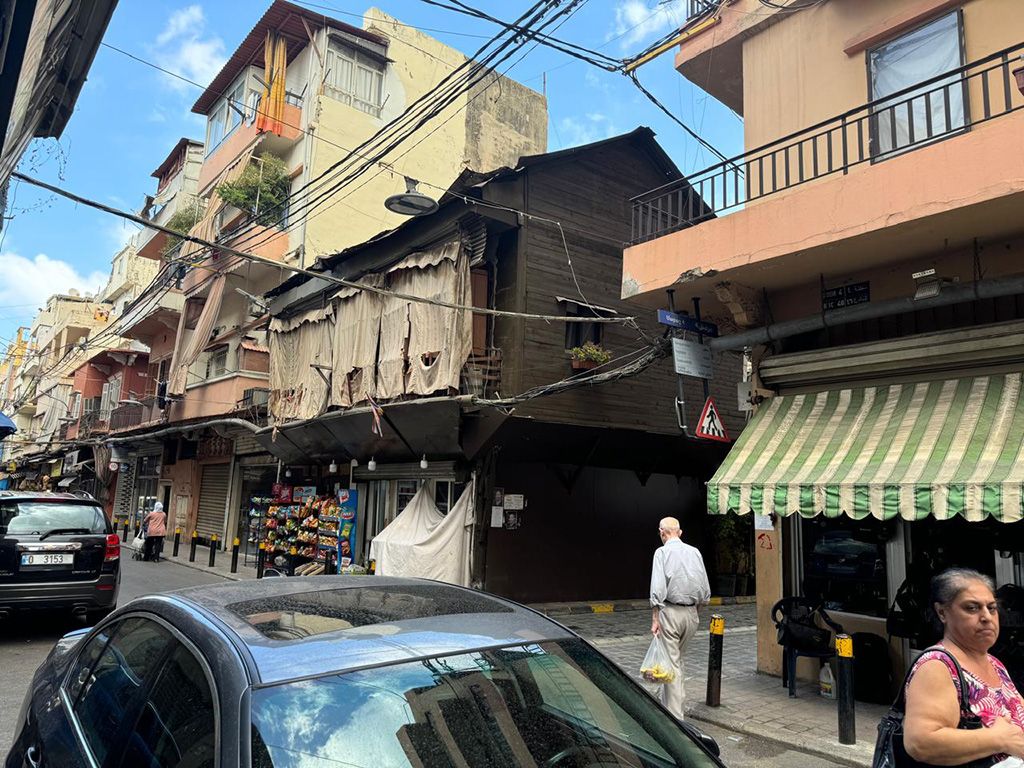
The aim is first to survey, then to map, sectors of the Beirut suburbs in order to capture the spatial changes that have affected them, but above all to give a voice to the residents of these sectors, who have lost their spatial landmarks and the solidarity networks of the past, over an 80-year span of the history of the capital’s suburbs. The research will produce a series of maps, some formal and some mental, showing how once-rural sectors have been transformed into urbanised ones. The question of nostalgia will thus be central: the memory of places and the loss of supposed local identities produce a discourse of “it was better before”.

Atelier for Research and CreationFind out more

ARC Design, Sustainable Materials and Additive Manufacturing

From September 2026

Directed by Abbas Sibai, PhD

Semesters: 2026-2027. Semester 1

This ARC positions design practice as its primary method of inquiry. Students collect and process spent coffee grounds from the ALBA campus, develop SCG-based composite recipes through iterative studio experimentation, cast them into PLA-printed molds, and produce physical prototypes evaluated by design criteria: form, surface quality, coherence, and meaning. Students from different disciplines (cinema, visual communication, graphic design, product design) are each guided to discover the object that makes sense for their own creative perspective. The ARC produces two equally valued outputs: a material documentation archive and a physical prototype with its creative rationale.

Atelier for Research and CreationFind out more

ARC Regionality, Territorial Vulnerabilities and Risk x Heritage

From September 2026

Directed by Joëlle Chaftari, PhD

Semesters: 2026-2027. Semester 1

This atelier explores territorial vulnerabilities and the dynamics through which disaster risk forms, through the geographical characteristics specific to each territory. Regionality is therefore the atelier’s central interpretive framework: it makes it possible to examine how physical and human characteristics and their relationships produce particular territorial configurations, likely to shape vulnerabilities, capacities and risk in different ways. In this edition, this problem is explored through heritage.

Atelier for Research and CreationFind out more

ARC Redefining the Interactions between Craft, Art and Design in Lebanon

From September 2026

Directed by Patricia Cortas, PhD

Semesters: 2026-2027. Semester 1

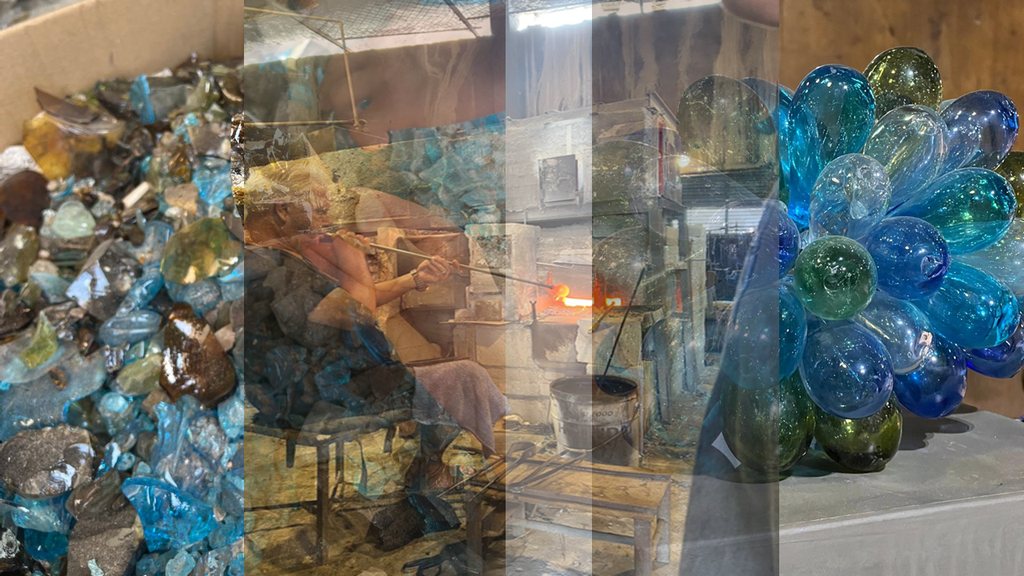
This ARC explores craft as a field of interdisciplinary research and creation, at the crossroads of local heritage and contemporary issues. In a context shaped by the globalisation of models, it asks how craft know-how can be documented, analysed and reinterpreted through different practices: architecture, design, interior architecture, urban planning, visual arts, cinema, audiovisual media, and graphic arts and advertising. Through fieldwork, meetings with artisans and the study of gestures, materials and objects, students will develop a critical reflection on the relationships between transmission, transformation and creation.

Atelier for Research and CreationFind out more

Archived ARCs

These ateliers are no longer open for enrolment. Their pages, semesters and documents remain available.

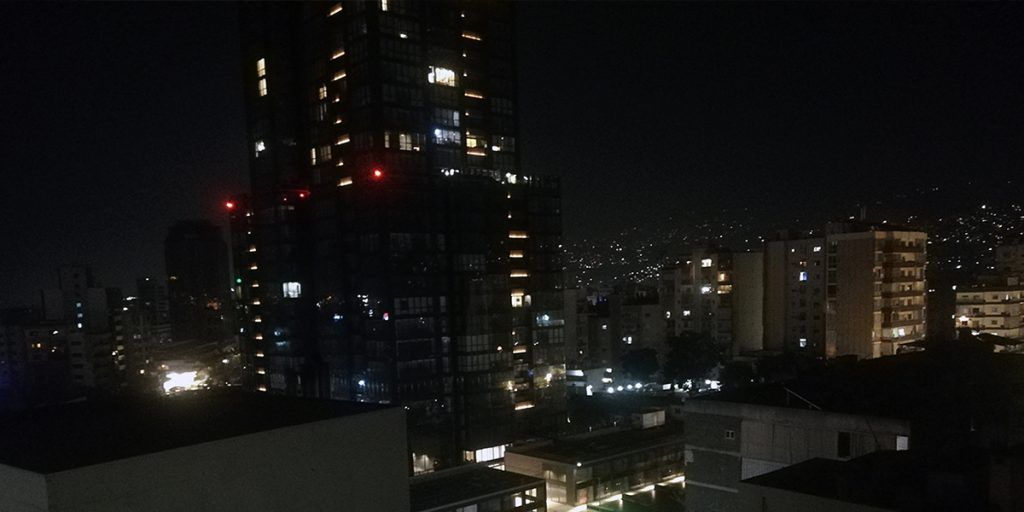
View from the 8th floor of the Lebanese Academy of Fine Arts (ALBA – UOB), home to the Centre for Research and Creation’s ARC Invisual Art.

ARC Invisual Art

September 2024 – May 2025

Directed by Ricardo Mbarkho, PhD

Semesters: 2024-2025. Semester 1 · 2024-2025. Semester 2 · 2025-2026. Semester 1

This Atelier for Research and Creation is set in a dynamic context of constant redefinition of art, marked by major ruptures. It is necessary to re-examine the place of the work of art in the light of the quest for freedom and the possible emergence of new languages for art. From this perspective, the research conducted within this ARC must explore the possibility of a work of art freed from the socio-economic model of the art market without, however, compromising its completeness. The central issue lies in the interaction between art and so-called non-artistic practices, with a view to a socio-economic evolution for art. This ARC focuses on this interaction, seeking to shed light on how it can shape new perspectives for art in a changing societal context, in which we observe an increasingly pronounced redundancy of art forms, to the point of a certain standardisation. The research hypothesis posits that using socio-economic models that exist outside the field of art as the medium of the work fosters its evolution and its liberation from the constraints imposed by the art market. This hypothesis is justified by the evolution of the status of the work in the face of the constraining power of the capitalist art market since the beginning of the 19th century. It raises the question of the impact of the so-called “invisual” work, suggesting that conceiving the work outside the territory threatened by the art market could be a promising way of fostering its development in a freer and more creative environment. The ARC puts forward the hypothesis that, beyond the organisational limits of visual art, other artistic territories remain to be explored.

Atelier for Research and Creation · ArchivedFind out more

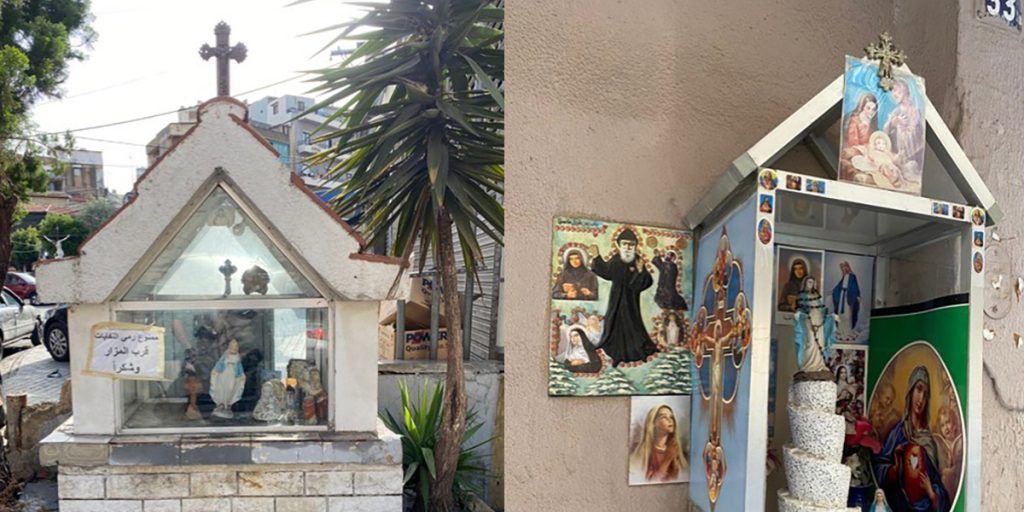
Photos taken by Raphael Lteif in May 2024.

ARC Mapping Religiosity in the Suburbs of Beirut

From September 2024 to July 2026

Directed by Michael Davie, PhD

Semesters: 2024-2025. Semester 1 · 2024-2025. Semester 2 · 2025-2026. Semester 2

The aim is to map all the material expressions of religious affiliation in the immediate suburbs of Beirut. This involves describing, recording, photographing and, above all, locating by GPS positioning all the informal places of worship (cabellas, mazars) and all the other markers of religious affiliation: political banners, but exclusively those with a religious connotation, verses from holy books, portraits of saints, martyrs and clergymen, icons, inscriptions, tags, memorials, statues and statuettes, etc. The surveys will deal exclusively with objects visible from the street. The districts of Sinn el-Fil, Dekwané and Nabaa will serve as the setting for the surveys. These data will be processed using a Geographic Information System. All disciplines have their place in this research, each contributing an explanatory angle: architects (methods for describing materials and construction techniques); interior architecture and design (analysis of styles, influences and histories); graphic arts (reading objects and their visual contexts); cinema (analysis of the techniques used to make objects visible); illustration and multimedia (the relationships between object and viewer); fashion (analysis of the relationship between society and the externalisation of the message); urban planning (analysis of the place of objects in the city and of its networks).

Atelier for Research and Creation · ArchivedFind out more

ARC When Artists Make Urban Space

February 2025 – May 2025

Directed by Christiane Sfeir, PhD

Semesters: 2024-2025. Semester 2 · 2025-2026. Semester 1

Given that the urban project is not limited to architectural or functional considerations, it also encompasses cultural and social dimensions. Urban art, in all its facets, often emerges as a creative response to the challenges posed by the city’s issues. By integrating artistic productions from the design stage of urban projects onwards, a more inclusive and participatory approach can be fostered. The atelier sets out to explore the production of urban space through an artistic lens, drawing on the observation of existing practices and uses. Taking into account the current crisis and the residents’ way of life, and incorporating elements of the forthcoming strategic plan, the artists will be tasked with formulating relevant proposals for modifications. These suggestions must not only anticipate the sustainable development project adopted by the city, but also be accepted and valued by the population.

Atelier for Research and Creation · ArchivedFind out more