
Loli Tsan

PhD. Classical pianist and holder of a doctorate in Romance Linguistics and Literatures from UCLA. Professor of medieval literature at the State University of New York. Her current research focuses on music beyond sound.
Having grown up in a family of composers, Loli Tsan – a classical pianist with a Licence de Piano from the Ecole Normale de Musique de Piano, as well as a third-cycle doctorate from Paris IV and a Ph.D. in Romance Linguistics and Literatures from UCLA – is a professor of medieval literature at the State University of New York.
She is the author of a thesis entitled Fragmentation et Écriture du Corps au Moyen-Âge, of numerous articles on the reception of globalisation in France and on 12th-century Romance literature, and of a book entitled L’Art à l’épreuve de la singularité.
Loli Tsan has presented the various aspects of her research in numerous lectures at universities in the United States, China, Brazil and Tunisia, and across Europe in France, Greece, Italy and Belgium.
Her current research focuses on Music beyond Sound and on the parallels between invisual art and the disintegration of sound in music.
In collaboration with Alexandre Gurita, she is working on recording a series of courses on the dematerialisation of music for Enda Autonome (the online version of the École nationale d’art de Paris).
Lecture title: La musique au-delà du son [Music beyond sound]
Date: Tuesday 12 November 2024 at 2.30 pm (Beirut time)
Format: Hybrid
Venue: Lebanese Academy of Fine Arts, Beirut (ALBA)
Language: French
Audience: Students in the invisual art atelier
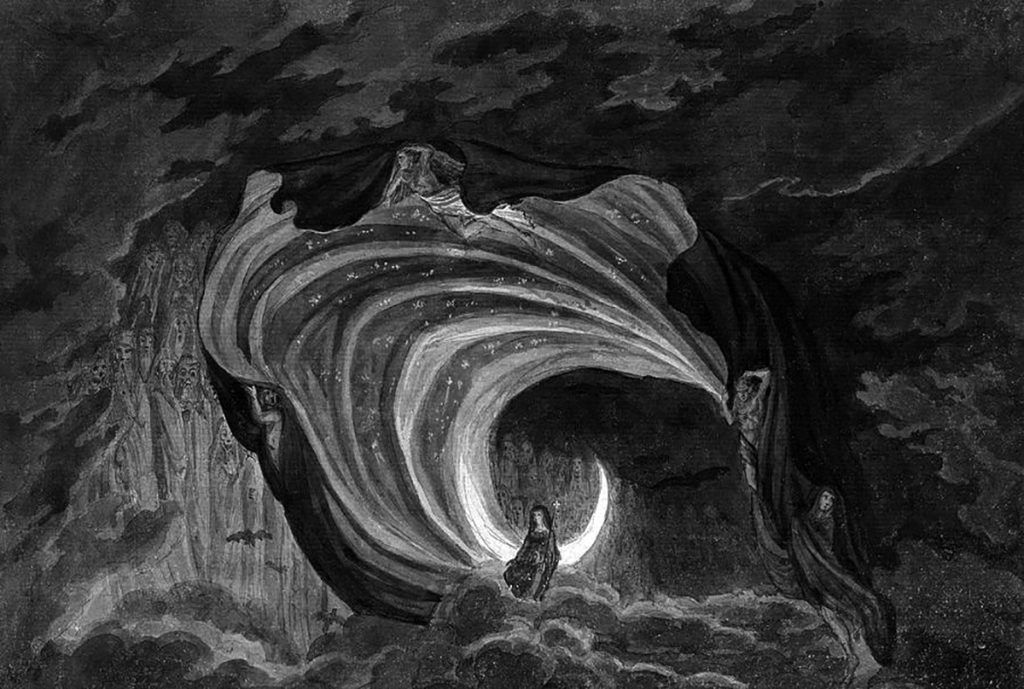
While invisual artists free themselves from the work, and invisual practices have been developing since the 1990s in opposition to visual art, we can observe that music is undergoing a similar dematerialisation. This project, which I would call the Opus Ultimum, describes this irresistible progression, namely the final encounter between sound and music, when music crosses the ultimate frontier, the sound barrier, illustrated by John Cage’s 4’33”, a totally silent performance made up of the ambient sounds that listeners hear or create while the piece is being performed. It is also the pianist Glenn Gould, who stopped giving concerts and refused all food during his recordings; it is his seatless chair, or his insistence, while practising, on drowning out the sound of his piano with a vacuum cleaner in order to create a mental image of his score…
And yet the precursors of this advance, of this sacrifice of sound, are called Mozart, Beethoven and Chopin, who, without conferring with one another or even being aware of the upheavals brewing in their last works, had already gone beyond tonality, polyphony and even melody, had already introduced a few incongruous seconds of silence into their writing, explored a protean chromaticism and generated sonic rainbows capable of abolishing colours by multiplying them infinitely. This genealogy of musical dematerialisation is the invisible mother of Russolo’s bruitism and of serial, concrete and acousmatic music. These are not yet iconoclasts, nor the subversive theories of dodecaphony, and yet, long before these experiments, the suspicion had already taken root that music exists beyond sound.