Ateliers for Research and Creation (ARC)
ARC Invisual Art
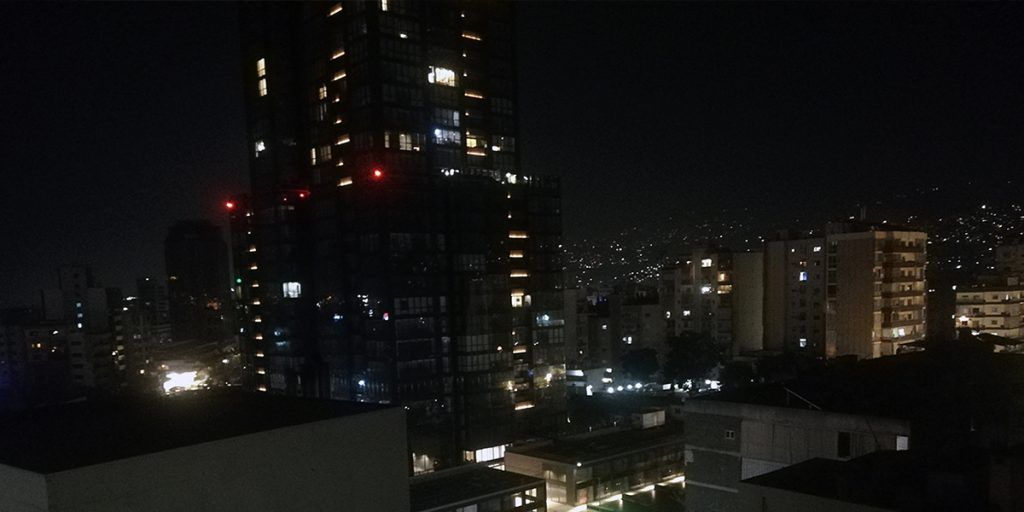
View from the 8th floor of the Lebanese Academy of Fine Arts (ALBA – UOB), home to the Centre for Research and Creation’s ARC Invisual Art.
Atelier for Research and Creation · Archived ARC
- Closed ARC: no longer open for enrolment
- September 2024 – May 2025
- Directed by Ricardo Mbarkho, PhD
Code: ARC1041-1
Lead teacher-researcher
Ricardo Mbarkho, PhD
ricardombarkho@alba.edu.lb
Start date: September 2024
Description
This Atelier for Research and Creation is set in a dynamic context of constant redefinition of art, marked by major ruptures. It is necessary to re-examine the place of the work of art in the light of the quest for freedom and the possible emergence of new languages for art. From this perspective, the research conducted within this ARC must explore the possibility of a work of art freed from the socio-economic model of the art market without, however, compromising its completeness. The central issue lies in the interaction between art and so-called non-artistic practices, with a view to a socio-economic evolution for art.
This ARC focuses on this interaction, seeking to shed light on how it can shape new perspectives for art in a changing societal context, in which we observe an increasingly pronounced redundancy of art forms, to the point of a certain standardisation. The research hypothesis posits that using socio-economic models that exist outside the field of art as the medium of the work fosters its evolution and its liberation from the constraints imposed by the art market.
This hypothesis is justified by the evolution of the status of the work in the face of the constraining power of the capitalist art market since the beginning of the 19th century. It raises the question of the impact of the so-called “invisual” work, suggesting that conceiving the work outside the territory threatened by the art market could be a promising way of fostering its development in a freer and more creative environment. The ARC puts forward the hypothesis that, beyond the organisational limits of visual art, other artistic territories remain to be explored.
Methodology
- Research and creation framework: The theoretical and conceptual basis of the research in this ARC is anchored in the evolution of art history, from the avant-gardes of the early 20th century to invisual art, which emerged at the end of that century. Invisual art seeks to theorise art outside the socio-economic model of visual art.
- Data collection techniques: Data are collected through interviews with artists and other professionals from various disciplines. Data collection also includes readings and observations of artistic events or actions, as well as in-depth analyses of invisual practices. “Invisual practices” rather than “invisual works”, because it is likely that in the field of invisual art there is no longer a work of art in the sense in which we understand it, whether material or immaterial.
- Data analysis: The data analysis aims to assess the extent to which the practices examined respond to the central question of art, focused on the quest for freedom and truth, and also the extent to which these practices lead to new languages and forms for art. It explores the way in which these practices evolve within socio-economic models considered non-artistic, in order to confirm the validity of our hypothesis. This comprehensive approach makes it possible to contextualise and grasp the multiple dimensions of a socio-economic art, or, in other words, of an invisual art.
Expected results
- Identification of so-called invisual practices, which may present themselves as artistic, evolving within organisational models other than the socio-economic model of the visual art market;
- Writing articles aimed at enriching the literature on a socio-economic, invisual art;
- Dynamics of openness towards research;
- Production of socio-economic, invisual art projects.
Assessment
- Attendance
- Following the CRC lecture series
- Writing a research article
- Final project
References
Books
- MILA, Corina Chutaux (2021). Esthétique de l’art invisuel. Éditions du Panthéon. French.
- MOINEAU, Jean-Claude (2023). Pour un art invisuel, inouï, inesthétique, inœuvré, pluriel…, Editions Biennale de Paris, 2023, 278 pp. French
Catalogues
- COLLECTIVE. Catalogue de la XIVe Biennale de Paris. Éditions Biennale de Paris, 2004, 548 pp. French, English, German.
- COLLECTIVE. Catalogue de la XVe Biennale de Paris, Editions Biennale de Paris, 2007, 1200 pp. French.
Articles
- GAÇA, Néjib. (n.d.). “Conférence à l’Institut des Beaux-Arts de Sousse (ISBAS) : Du visuel illusoire à l’invisuel subversif”. La Presse. Retrieved from https://lapresse.tn/170438/conference-a-linstitut-des-beaux-arts-de-sousse-isbas-du-visuel-illusoire-a-linvisuel-subversif/
- MBARKHO, Ricardo (2021). “En marche vers une idéologie neutre de la politique culturelle”, in incertains regards, Presses Universitaires de Provence. French.
- MBARKHO, Ricardo (2021). “What Is at Stake in the Interaction between Media Arts and Cultural Industries in Lebanon”, Leonardo, Journal of the International Society for the Arts, Sciences and Technology, Volume 54, No. 6, The MIT Press. 714–716. English. https://doi.org/10.1162/leon_a_02098
- MOLLET-VIEVILLE, Ghislain (2020, September 20). “L’art non artistique et le statut d’agent d’art qui en découle”. Revue de Paris. https://www.revuedeparis.fr/lart-non-artistique-et-le-statut-dagent-dart-qui-en-decoule/
- MONSINJON, Éric (2020, July 5). “L’art invisuel, qu’est-ce que c’est ?”. Revue de Paris. https://www.revuedeparis.fr/l-art-invisuel-qu-est-ce-que-c-est/
- VIDALON, Roxane (2024, May 19). “L’art invisuel pour repousser les limites”. La Dépêche. https://www.ladepeche.fr/2024/05/19/roxane-vidalon-lart-invisuel-pour-repousser-les-limites-11960266.php
Video
- MBARKHO, Ricardo (2018). “Le modèle socioéconomique de l’art invisuel”. Recorded for FoméA – Paris. [Video]. YouTube. https://youtu.be/3NfG8Wcl4Ns?si=wiT2YzmKXvvnOfpA
Events
- Biennale de Paris. (n.d.). Colloque International : L’Art Invisuel : Doxa et Paradoxe. Retrieved from https://biennaledeparis.fr/%C3%A9v%C3%A8nement/colloque-international-art-invisuel-doxa-et-paradoxe/
- Fabula. (n.d.). Colloque : L’Art Invisuel : Champs d’application et d’implication (Sousse – Tunisia). Retrieved from https://www.fabula.org/actualites/117502/un-colloque-international-sur-le-theme-l-art.html
- Konexion Culture. (n.d.). Colloque International : L’Art Invisuel : Réfléchir sur le devenir de l’art africain libéré des modèles occidentaux. Retrieved from https://konexionculture.com/colloque-international-art-invisuel-reflechir-sur-le-devenir-de-lart-africain-libere-des-modeles-occidentaux/
Materials required by the student
- Computer or tablet
Action plan
- Phase 1: Observation of the artistic and non-artistic field
- Phase 2: Analysis of works and hypotheses for a socio-economic art
- Phase 3: Article writing and creative practices
- Phase 4: Event and publication
Provisional schedule
Session 1
- Review and viewing of existing references, with an emphasis on relevant interdisciplinary work.
- Formulation of interdisciplinary research questions.
- Establishing the research problem in the context of artistic interdisciplinarity.
- Meeting(s)
- Readings: [bibliographic reference]
- Number of hours: 3 hours
- Independent work: 8 hours
Session 2
- Refinement of the research questions, exploring the connections between the different disciplines.
- Development of the research hypothesis, integrating theoretical and practical elements.
- Meeting(s)
- Readings: [bibliographic reference]
- Number of hours: 3 hours
- Independent work: 8 hours
Sessions 3 and 4
- Data collection: interviews with artists and professionals from different disciplines.
- Note-taking and recording of the interviews for in-depth analysis.
- Observation of interdisciplinary artistic events, with an emphasis on interactions and reciprocal influences.
- Documentation of the observations and recording of relevant elements to inform the theoretical and practical research.
- Meeting(s)
- Readings: [bibliographic reference]
- Number of hours: 3 hours per session
- Independent work: 8 hours per session
Sessions 5 and 6
- Analysis of the data collected: grouping of emerging themes and patterns, taking interdisciplinary aspects into account.
- Interpretation of the results in relation to the research hypothesis, taking into account the contributions of the different disciplines concerned.
- Identification of the links between theoretical and practical data for a comprehensive understanding.
- Reflection on the interdisciplinary implications of the results and their impact on artistic creation.
- Synthesis of the results of the analysis and discussion of the implications for art, highlighting the synergies and challenges related to artistic interdisciplinarity.
- Invisual art residency
- Meeting(s)
- Mid-term assessment
- Readings: [bibliographic reference]
- Number of hours: 3 hours per session
- Independent work: 8 hours per session
Sessions 7 and 8
- Presentation of each student’s research and/or creative projects.
- Production of the theoretical research articles.
- Production of the practical creative works.
- Meeting(s)
- Readings: [bibliographic reference]
- Number of hours: 3 hours per session
- Independent work: 8 hours per session
Sessions 9 and 10
- Finalisation of the research project: revision, editing and preparation for presentation or publication, highlighting the contributions of interdisciplinarity to theoretical research and practical creation.
- Writing the conclusion of the research project, highlighting the interdisciplinary findings and practical recommendations to support artistic interdisciplinarity.
- Meeting(s)
- Final submission
- Readings: [bibliographic reference]
- Number of hours: 3 hours per session
- Independent work: 8 hours per session
Language of instruction
- French
- English (if needed)
Overall breakdown of hours
- On-site teaching/research hours = 30 hours
- Independent work = 80 hours
Group size
- Ten first-year Master’s students
Lead facilitator
Lecturers
2024-2025. Semester 1
- Roxane Vidalon
- Gary Bigot
- Rose Marie Barrientos, PhD
- Éric Monsinjon
- Corina Chutaux Mila
- Mariem Memni
- Ghislain Mollet-Viéville, PhD
- Yosr Mahmoud
- Gilbert Coqalane
- Loli Tsan, PhD
2024-2025. Semester 2
Semesters
- 2024-2025. Semester 1Course sheet – 2024-2025. Semester 1 (PDF, 144 KB)Lectures →Facilitated sessions →
- 2024-2025. Semester 2Course sheet – 2024-2025. Semester 2 (PDF, 148 KB)Lectures →
- 2025-2026. Semester 1Course sheet – 2025-2026. Semester 1 (PDF, 159 KB)
Project partners
MACAM
MACAM hosts the participants of this ARC at an art residency in Alita (Byblos), Lebanon. ENDA provides additional visibility in terms of communication and offers a scholarship to a Master’s student to join its programme as a scholarship holder.
Biennale de Paris
The Biennale de Paris provides additional visibility in terms of communication and invites figures from the art world to take part in a round table as part of this ARC. It invites students from this ARC to take part in actions that it organises.
Revue de Paris
The Revue de Paris offers students of this ARC the opportunity to publish a text in the journal, provided it fits its editorial line and after approval by its editorial committee.