Mariem Memni
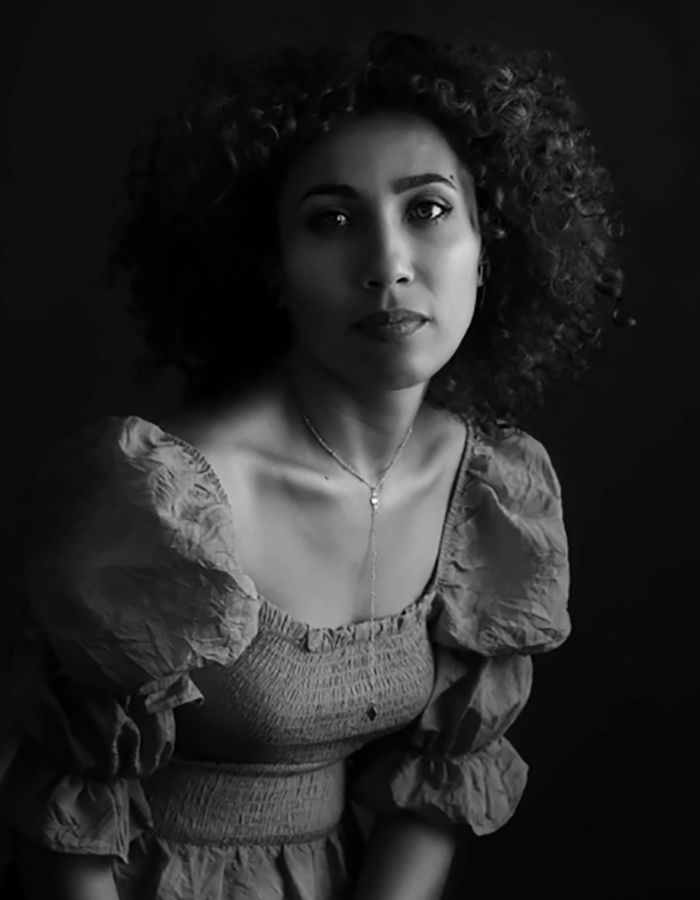
- Lecturer in the ARC: Invisual Art (archived ARC)
She holds a Master’s degree from the ISBAS (Higher Institute of Fine Arts of Sousse, Tunisia) as well as a DNREA (National Diploma of Research and Experimentation in Art) from the ENDA (École nationale d’art de Paris), obtained in 2021. Mariem Memni develops chata, an invisual practice she invented herself, defined as a “process of converting negative energy into positive energy that guarantees harmony within a group”. She also pursues a practice entitled lifeformance, a form of performance on the scale of a life, which regards life as a whole as an artistic process.
She has created a new discipline, migrology, which regards the migrant as a potential artist capable of transforming their life as a migrant into a work of art. The EEIMA is founded on the conviction that invisual art can play a crucial role in the integration and emancipation of migrants. Within the EEIMA, the artist has developed an “adaptation scale”, a grid for measuring the migrant’s adaptation or maladaptation to the context in which they are settling. The latest article mentioning Mariem Memni, entitled L’artiste invisuel comme citoyen expérimental, by Audrey Poussines, was published in the magazine Étapes in May 2024.
Lecture title: La migrologie comme forme d’art invisuel [Migrology as a form of invisual art]
Date: Tuesday 22 October 2024 at 2.30 pm (Beirut time)
Format: Hybrid
Venue: Lebanese Academy of Fine Arts, Beirut (ALBA)
Language: Arabic
Audience: Students in the invisual art atelier
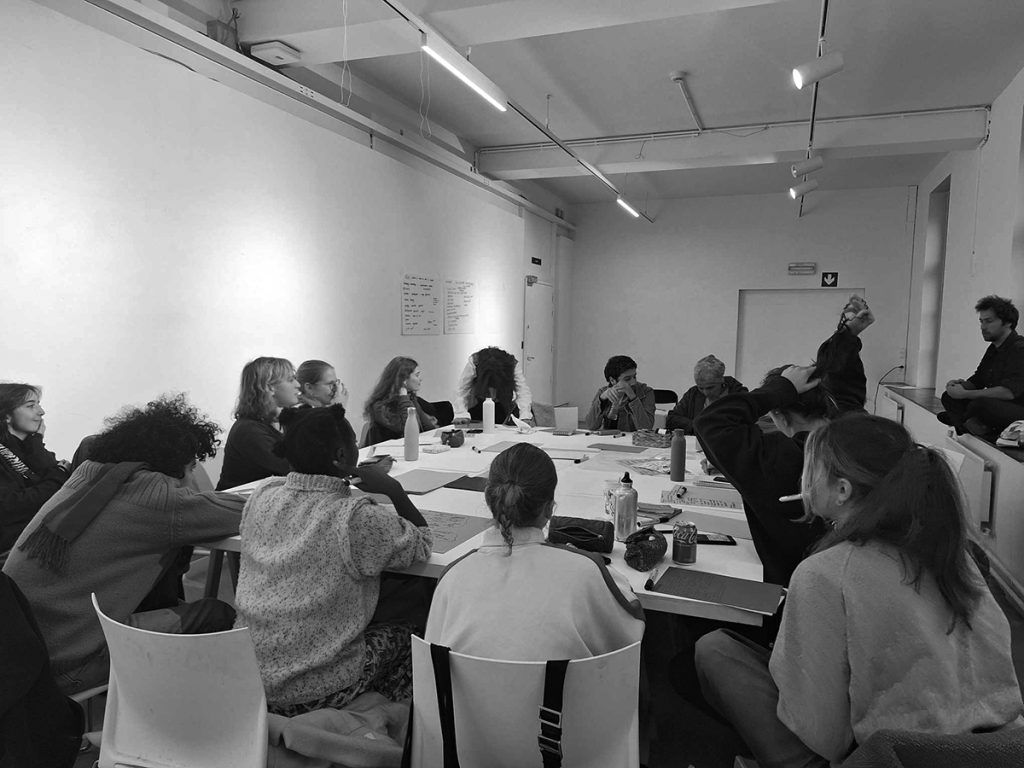
In this lecture, I will present migrology, a concept I have developed to approach migration as a form of invisual art, going beyond the mere geographical movement of populations. From the standpoint of migrology, each migratory journey becomes a work of art shaped by the transformations that migrants go through. Unlike works of art, migrology captures things that make up an invisible realm (interactions, life choices, social relationships…) as artistic expressions.
I will also present chata, a process that transforms negative energies into positive forces, which is essential in a migratory context. Chata fosters collective harmony, transforming social tensions into creative energies.
Finally, I will talk about “lifeformance”, a process that regards everyday lived experience as a kind of performance on the scale of a lifetime.
My work brings together migrology, chata and lifeformance, and aims to show how invisual art can transform our perceptions and the way we inhabit reality.