Yosr Mahmoud
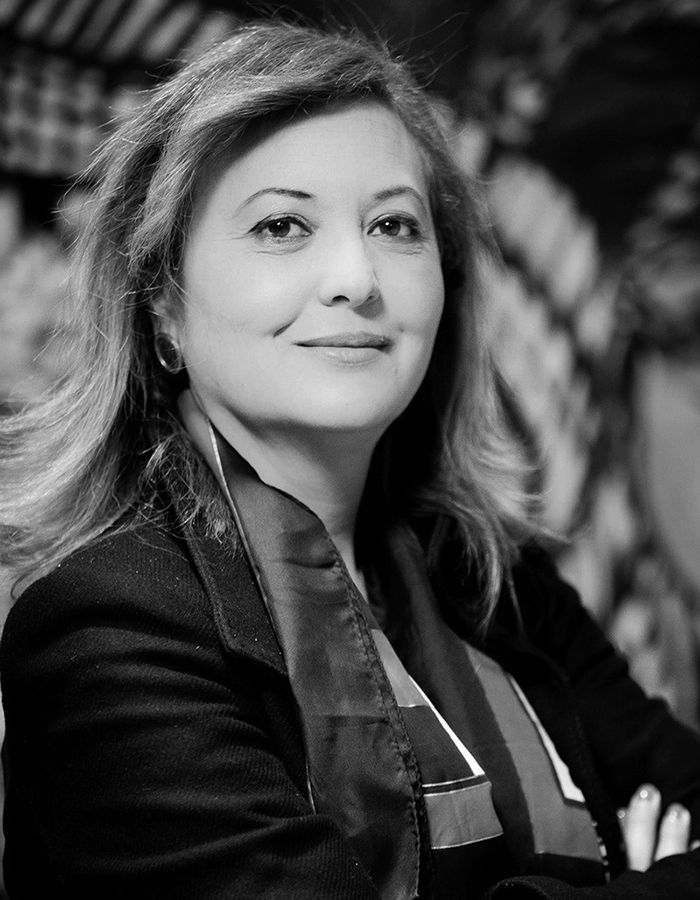
- Lecturer in the ARC: Invisual Art (archived ARC)
This aesthetic transcends the work of art and lays the foundations of a category in its own right within invisual art, based on hospitality. The artist introduced the term matriartist to bring to the fore women artists who are mothers in a world where patriarchy dominates. Committed, Yosr Mahmoud explores her genealogical identity, drawing on the virtues of her ancestral heritage. Maurice Blanchot states in Sublime parole that “Hospitality consists less in feeding the guest than in restoring his taste for food by bringing him back to the level of need, in a life where one can say, and bear to hear said: And now, let us not forget to eat”. Her latest lecture on the Aesthetics of Hospitality took place as part of the national cultural festival in Tunisia (Sousse), JEPTAV 2024 – L’art invisuel : champs d’application et d’implication.
Lecture title: L’esthétique de l’hospitalité comme mode opératoire matriartistique [The aesthetics of hospitality as a matriartistic modus operandi]
Date: Tuesday 15 October 2024 at 1.30 pm (Beirut time)
Format: Hybrid
Venue: Lebanese Academy of Fine Arts, Beirut (ALBA)
Language: French
Audience: Students in the invisual art atelier
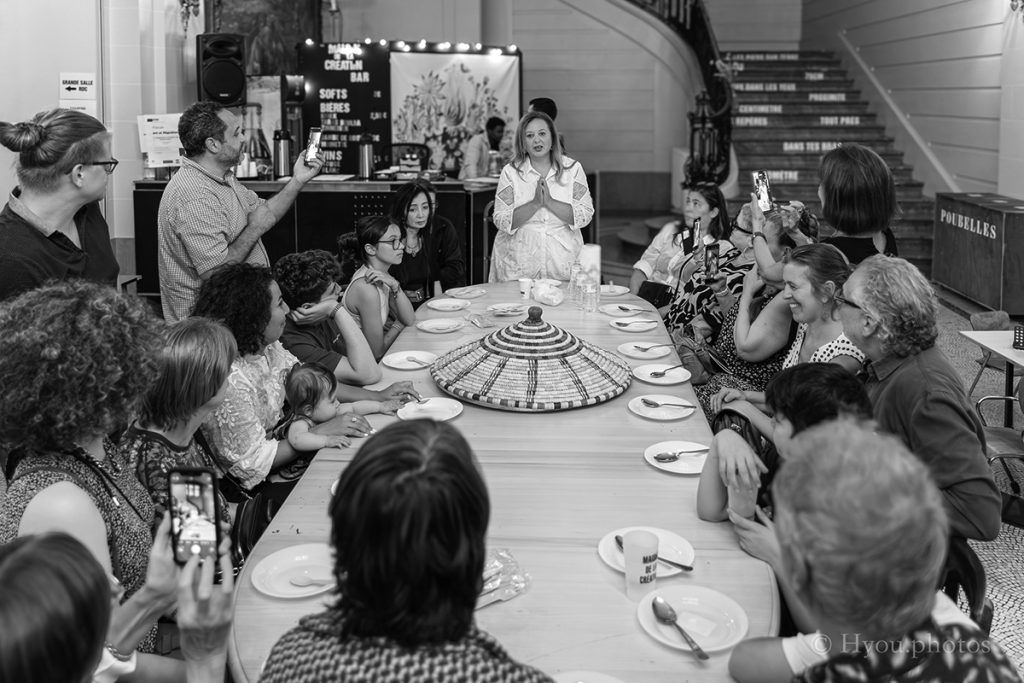
The lecture presents the aesthetics of hospitality as an invisual art practice closely bound up with ethics and aesthetics, lying at the heart of the matriartistic approach. This approach brings together artists rooted in their cultural and matrilineal heritage, highlighting everyday activities that are often overlooked, as art forms in their own right.
Gestures of care, welcome and sharing form the foundation of the matriartists’ modus operandi. By revealing their aesthetic and ethical dimension, these gestures are transformed into creative acts. Through this process, matriartists raise domestic and nurturing practices, traditionally perceived as ordinary and mundane, to the rank of art. These matriartistic actions, founded on generosity and consideration for others, embody a form of artistic expression deeply rooted in the idea of hospitality and conviviality.
The lecture shows how matrilineal traditions of hospitality, such as “el walima”, a Tunisian ritual of sharing, possess an aesthetic potential that can be reactivated in a contemporary context to counter individualism and hostility. By transforming ordinary acts, such as preparing and sharing meals, into artistic gestures, the aesthetics of hospitality redefines art as an inclusive process in which sharing and conviviality are essential to creation. In this way, the boundaries between ethics and aesthetics, between art and everyday life, fade away.