
Ateliers for Research and Creation (ARC)
ARC Redefining the Interactions between Craft, Art and Design in Lebanon
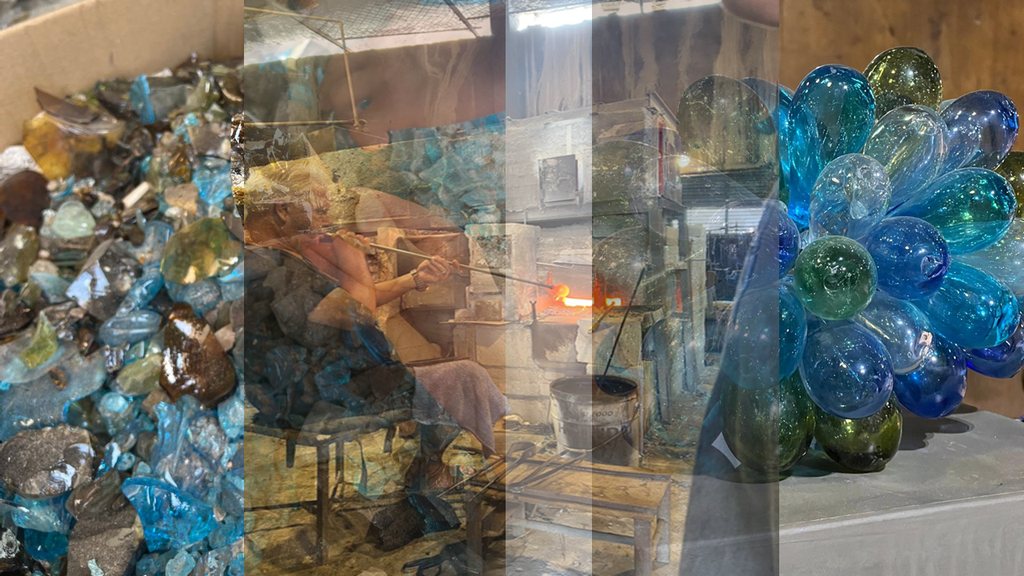
Atelier for Research and Creation
- From September 2026
- Directed by Patricia Cortas, PhD
Code: ARC10410-1
Lead teacher-researcher
Patricia Cortas, PhD
patricia.cortas@alba.edu.lb
Start date: September 2026
Introduction
- Project context: In an era of accelerated circulation of forms, knowledge and cultural models, craft practices lie at the heart of complex dynamics between local heritage and global influences. In the Lebanese context, these practices bear witness to a rich history of transformations, marked from the nineteenth century onwards by the introduction of Western models into local production, particularly in furniture. Today, this tangible and intangible heritage is both weakened by economic, social and cultural change and reactivated by new forms of contemporary creation.
In this context, craft cannot be approached solely as a relic of the past or an object of conservation, but as an active field of research and creation. It involves issues related to the transmission of know-how, the transformation of gestures and the use of materials, as well as the relationships between makers, designers and users. An interdisciplinary approach therefore becomes essential to understand these phenomena, bringing together the perspectives of architecture, design, the visual arts, film and spatial and urban practices. It makes it possible to explore craft as a complex system, situated at the intersection of cultural, social, economic and aesthetic dimensions.
- Research questions:
- How are local craft practices transformed by the global circulation of forms, techniques and imaginaries?
- How can craft know-how be reinterpreted in contemporary practices without being reduced to a mere reproduction of the past?
- What kinds of relationships are established today between craftspeople, designers, artists and other creative actors, and how do these interactions influence design and production processes?
How can different disciplines such as architecture, design, the visual arts and film contribute, each with its own tools and languages, to documenting, analysing and transforming these practices? - To what extent can craft be a vector of sustainability, through the transmission of know-how, the use of local resources and the reactivation of local productive ecosystems?
- Problem statement: In a context marked by tensions between the globalisation of models and the local rootedness of practices, how can craft know-how be mobilised as a field of interdisciplinary research and creation, allowing at once its contemporary reinterpretation, its transmission and its inclusion in sustainable cultural dynamics?
Research hypothesis
- Statement of the hypothesis: In a context of globalised cultural models, craft can be a privileged field of interdisciplinary research and creation, capable of generating situated contemporary forms, provided that it is approached not as a heritage to be reproduced, but as a system of know-how to be reinterpreted through the intersection of disciplines, practices and perspectives.
- Justification of the hypothesis: This hypothesis rests on the idea that craft practices are constantly changing, shaped by historical circulations, cultural influences and changing uses. In the Lebanese context, the history of furniture and craft know-how reveals processes of hybridisation between local models and outside influences, which today constitute an active potential for reinterpretation.
The interdisciplinary approach makes it possible to go beyond a strictly heritage-based reading of craft, by drawing on tools from various creative fields (architecture, visual arts, film, audiovisual, decorative arts, design, interior architecture or urban planning). It encourages the analysis, documentation and transformation of craft practices from complementary perspectives, paving the way for forms of contemporary creation that translate and update know-how.
Finally, the interactions between craftspeople, designers and other creative actors provide a favourable framework for experimentation and knowledge production. They make it possible to question the relationships between design, making and use, while contributing to the active transmission of know-how, by reactivating it and showcasing it in contemporary contexts, and by placing craft within dynamics of cultural sustainability.
Description
This ARC explores craft as a field of interdisciplinary research and creation, at the crossroads of local heritage and contemporary issues. In a context marked by the globalisation of models, it questions how craft know-how can be documented, analysed and reinterpreted through different practices: architecture, design, interior architecture, urban planning, visual arts, film, audiovisual, or graphic arts and advertising.
Through fieldwork, encounters with craftspeople and the study of gestures, materials and objects, students will develop a critical reflection on the relationships between transmission, transformation and creation. The atelier aims not to reproduce the forms of the past, but to reactivate them in contemporary, sensitive and situated proposals. It thus invites participants to think of craft as a vector of cultural sustainability, of the enhancement of know-how and of creative innovation.
Learning outcomes
By the end of this ARC, the student will be able to:
- Identify the main concepts and theories related to the subject.
- Critically interpret relevant works and documents.
- Assess the different perspectives and approaches related to the research field.
- Analyse complex issues related to the subject.
- Solve practical problems by applying the knowledge acquired during the ARC.
- Design innovative and creative solutions by integrating the concepts acquired.
- Plan and organise projects using the skills acquired.
- Carry out practical work demonstrating mastery of the skills acquired.
- Produce high-quality reports or presentations, using clear communication.
- Apply the skills acquired in professional contexts relevant to the research field.
Methodology
- Research and creation framework: This ARC follows an interdisciplinary research-creation approach, combining critical analysis, fieldwork and contemporary production. It draws on approaches from art history, design and spatial practices, as well as the visual arts and image-based practices, in order to study craft as a dynamic system, open to objects, gestures, materials and practices, and constantly changing.
The conceptual framework rests on the tensions between globalisation and local rootedness, the processes of hybridisation between heritage and contemporaneity, and active transmission and cultural sustainability. Creation is seen as a tool of investigation that makes it possible to produce knowledge through the reinterpretation of craft practices.
- Data collection methods: Data collection is based on a qualitative approach combining:
- Fieldwork (visits, immersion, observation),
- Meetings and interviews with craftspeople, designers and other actors,
- Visual and written documentation (photographs, videos, sketches, notes),
- Analysis of references and case studies.
- These tools make it possible to study materials, gestures, objects, making processes and the relationships between design, production and use.
- Data analysis: The analysis relates the data collected to one another: observations, interviews, documentation and the students’ productions. It aims to identify recurring themes such as hybridisation, transmission, changing practices and the tensions between the local and the global.
A comparative and interdisciplinary reading makes it possible to cross viewpoints and reveal the complementarities between disciplines. The projects developed by the students constitute a form of critical synthesis, in which creation becomes a tool for interpreting and testing the hypothesis.
Assessment
- Attendance (10%)
- Following the CRC lecture series (20%)
- Mid-term submission (30%)
This submission takes the form of an interim file comprising:
- A first research phase (fieldwork, documentation, references),
- a critical analysis of the practices observed (gestures, objects, materials, processes),
- a clarified individual problem statement,
- avenues for reinterpretation (sketches, diagrams, intentions, initial experiments).
This submission assesses the student’s ability to combine observation, analysis and a critical position.
- Final submission (40%)
The final submission comprises:
- A research-creation project (object, installation, visual production, short video, spatial device or another form suited to the discipline),
- accompanied by an explanatory file presenting the approach, the references, the process and the reinterpretation choices,
- an oral presentation.
This submission assesses the coherence between research and creation, the quality of the reinterpretation, the relevance of the critical position and the ability to produce a situated contemporary proposal.
References
- BAYARD, Marc et Ève MASCARAU. «Le Mobilier national et le colbertisme 4.0 : des actions au service des arts décoratifs». Le Journal de l’École de Paris du management, 172(3), juillet 2025, pp. 36-42. [En ligne] : https://doi-org.ezproxy.usek.edu.lb/10.3917/jepam.172.0036
- CORTAS, Patricia. Identification de l’héritage mobilier au Liban : de la moitié du XIXᵉ siècle jusqu’au début du XXᵉ siècle. Doctorat, Université Saint Esprit de Kaslik, Faculté d’Art et Sciences, Département d’Histoire et d’Archéologie, 2023, 516 p.
- CORTAS, Patricia (2022). La relation entre l’évolution de la posture et le geste artisanal. ASTASA, 30 juin 2022. [En ligne] : https://www.astasa.org/2022/06/30/la-relation-entre-levolution-de-la-posture-et-le-geste-artisanal/
- INGOLD, Tim (2013). Making : Anthropology, archaeology, art and architecture, Londres, Routledge, 176 p.
- PRESS, Mike. «The Culture of Craft: Status and Future Peter Dormer (Editor)». The Design Journal, 1(2),1998, pp. 50-54. [En ligne] : https://doi-org.uobezsecureaccess.idm.oclc.org/10.2752/146069298790718733
- RISATTI, Howard (2007). A theory of craft : function and aesthetic expression, University of North Carolina Press. [En ligne] : https://search.ebscohost.com/login.aspx?direct=true&scope=site&db=nlebk&db=nlabk&AN=358049
- ROSS, Wendy et Vlad GLAVEANU. «The constraints of habit: craft, repetition, and creativity». Phenom Cogn Sci, n° 24, mars 2023, pp. 251-271. [En ligne] : https://doi-org.uobezsecureaccess.idm.oclc.org/10.1007/s11097-023-09902-5
- SENNETT, Richard (2008). The craftsman, Yale Univeristy Press. Accessible sur : ProQuest Ebook Central
- SURREAUX, Louis. La création contemporaine dans le Mobilier national et les Manufactures nationales des Gobelins, de Beauvais, de la Savonnerie et de Sèvres de 1945 à 2000. Doctorat, Université de Poitiers, Ecole Doctorale n°525 – Lettres, Pensée, Art et Histoire, 2022, [En ligne] : https://theses.hal.science/tel-03820393v1/file/2017-Surreaux-Louis-These.pdf
- YouTube (2021). Rencontres des Gobelins 2020-21 : Figure de style - réinterpréter le mobilier ancien. [En ligne] https://www.youtube.com/watch?v=zwZmwarfQ9E (consulté le 6 avril 2021).
- Summary of previous studies: Contemporary approaches to craft also take place within institutional and interdisciplinary frameworks, such as the Rencontres des Gobelins organised by the Mobilier National. These meetings bring together researchers, craftspeople, designers and professionals around themes related to art history, the decorative arts, the crafts and design. They question the relationships between traditional know-how, technical innovation and contemporary creation, highlighting the transformations of materials, processes and uses, as well as current issues of sustainability and eco-responsibility.
- Other research on craft has widely explored the technical, aesthetic and cultural dimensions of “making”, highlighting the relationship between gesture, material and form. Other works have analysed craft in the context of contemporary transformations, in connection with design, industrial production and changing uses.
- Gaps in the literature with regard to the present project: In the Lebanese context, research on furniture heritage and craft know-how remains limited, although some studies have highlighted the processes of hybridisation between Western influences and local practices, as well as the issues of transmission, loss and revaluation of this heritage.
Expected results
- This ARC aims to produce results that are at once analytical, experimental and creative, arising from the combination of fieldwork, critical reflection and interdisciplinary practice
In terms of research, students will develop an in-depth understanding of craft practices through the study of gestures, materials, objects and making processes. Fieldwork and interviews with craftspeople, designers and other creative actors will make it possible to gather testimonies, practical knowledge and situated experiences, contributing to an analysis of the dynamics of transmission, hybridisation and transformation.
In terms of creation, students will produce a variety of interdisciplinary proposals, such as:
- objects or prototypes resulting from the reinterpretation of craft forms,
- installations or spatial devices exploring the relationships between gesture, material and use,
- visual or audiovisual productions documenting or reinterpreting making processes,
- graphic or film narratives staging the interactions between craftspeople and creators.
These productions will express a critical reinterpretation of know-how, not as a reproduction of the past, but as its reactivation and enhancement in contemporary contexts.
Finally, the results may be showcased through presentations or exhibitions, highlighting the role of interdisciplinary research-creation in the transmission and sustainability of craft practices.
Discussion and conclusion
- Discussion of the results: The expected results of this ARC highlight the central role of interdisciplinarity in understanding and transforming craft practices. Collaborations between students from different disciplines make it possible to combine analytical, sensitive and project-based approaches, thus enriching the forms of expression produced.
These interactions encourage the emergence of new creative perspectives, in which the object, the image or the space are no longer considered in isolation, but as the result of complex relationships between gesture, material, use and narrative. The synergies between disciplines also make it possible to reveal often invisible dimensions of craft practices, such as the temporalities of making, the logics of transmission or the contemporary conditions of production.
- Conclusion: This ARC shows that craft, approached through an interdisciplinary research-creation process, is a fertile field for exploring the tensions between globalisation and local rootedness. It shows that the reinterpretation of know-how, far from leading to its disappearance, contributes to its active transmission and to its re-inscription in contemporary contexts.
The interdisciplinary approach has several advantages: it makes it possible to overcome disciplinary boundaries, to multiply viewpoints and to renew forms of artistic expression. It also involves challenges, particularly in coordinating the methods, languages and expectations specific to each discipline. However, these tensions are in themselves a driver of creation and innovation.
In relation to the initial problem statement, this ARC demonstrates that craft can be mobilised as a space of research and creation capable of producing situated contemporary forms, while contributing to a better understanding of cultural dynamics and of the processes through which practices change.
- Implications and recommendations: The results of this ARC have educational, artistic and cultural implications. They underline the importance of integrating interdisciplinary approaches into art education, by encouraging collaboration between students, craftspeople and professionals.
They also invite institutions to support initiatives that showcase craft know-how from a contemporary perspective, by encouraging experimentation, collaborative workshops, research and dissemination platforms.
For artists and designers, this ARC highlights the need to develop situated practices, attentive to local contexts, materials and processes. It thus encourages grounded, critical and responsible forms of creation.
- Outlook: Finally, this project highlights the need to pursue research at the intersection of craft, contemporary creation and interdisciplinarity, in order to strengthen the transmission of know-how and stimulate creative innovation.
Facilitators
- External professionals
- Teachers and researchers from ALBA, from different departments
Materials required by the student
- Research notebook (sketches, notes, observations)
- Laptop
- Basic software (depending on the discipline)
- Documentation tools (camera, or smartphone with good-quality camera and audio)
- Simple materials for experiments and models (depending on the projects)
Action plan
- Exploration and framing
Introduction to the issues of the project, formulation of the research questions and definition of the lines of work.
- Inquiry and collection
Fieldwork (visits, meetings, interviews) and documentation of gestures, materials, objects and making processes.
- Analysis and positioning
Interpretation of the data collected, development of a critical position and elaboration of the first avenues for reinterpretation.
- Experimentation and creation
Development of interdisciplinary proposals through formal, material or narrative experimentation.
- Finalisation and presentation
Production of the final projects and presentation of the results in suitable formats (object, image, audiovisual, etc.)
Schedule
Session 1: Introduction and framing
- Presentation of the ARC, its objectives and the research-creation approach.
- Introduction to the issues of craft between heritage, globalisation and contemporary creation.
- Presentation of interdisciplinary references (projects, works and research combining craft, design, visual arts and spatial practices).
- Formation of groups or individual pathways according to discipline.
- Readings:
- The craftsman – Richard Sennett
- Making : Anthropology, archeology, art and architecture – Tim Ingold
- Number of hours: 3 hours
- Independent work: 9 hours
Session 2: Problem statement and hypothesis
- Refinement of the research questions, exploring the connections between the different disciplines.
- Development of the individual problem statement.
- Formulation of the research hypothesis, integrating theoretical and practical elements.
- Introduction to the notions of gesture, repetition and creativity.
Readings
- The constraints of habit: craft, repetition, and creativity – Wendy Ross and Vlad Glaveanu
- La relation entre l’évolution de la posture et le geste artisanal – Patricia Cortas
- Number of hours: 3 hours
- Independent work: 9 hours
Session 3: Fieldwork (1)
Introduction to inquiry methods
- Data collection: interviews with artists and professionals from different disciplines.
- Note-taking and recording of the interviews for in-depth analysis.
- Observation of craft practices (gestures, materials, objects), with an emphasis on interactions and mutual influences.
- Documentation of observations and recording of relevant elements to feed theoretical and practical research (notes, photos, videos).
- Organisation of visits and meetings.
- Reading: A theory of craft : function and aesthetic expression – Howard Risatti
- Number of hours: 3 hours per session
- Independent work: 9 hours per session
Session 4: Fieldwork (2)
- Interviews with craftspeople, artists or professionals from different disciplines.
- Analysis of the interactions between design, production and use.
- Consolidation of the research corpus.
- Reading: Identification de l’héritage mobilier au Liban : de la moitié du XIXe siècle jusqu’au début du XXe siècle – Patricia Cortas
- Number of hours: 3 hours per session
- Independent work: 9 hours per session
Session 5: Analysis and interpretation
- Analysis of the data collected: grouping of emerging themes and patterns, taking interdisciplinary aspects into account.
- Interpretation of the results in relation to the research hypothesis, taking into account the contributions of the different disciplines involved.
- Identification of the links between theoretical and practical data for an overall understanding.
Readings
- The Culture of Craft: Status and Future Peter Dormer (Editor) – Mike Press
- Le mobilier national et le colbertisme 4.0 : des actions au service des arts décoratifs – Marc Bayard and Eve Mascarau
- Number of hours: 3 hours per session
- Independent work: 9 hours per session
Session 6: Positioning and mid-term
- Reflection on the interdisciplinary implications of the results and their impact on artistic creation.
- Definition of the critical position of each project.
- Synthesis of the results of the analysis and discussion of the implications for art, highlighting the synergies and challenges of artistic interdisciplinarity.
- Development of avenues for reinterpretation.
- Mid-term review
- Reading: Rencontres des Gobelins 2020-21 : Figure de style – réinterpréter le mobilier ancien – YouTube
- Number of hours: 3 hours per session
- Independent work: 9 hours per session
Sessions 7-8: Experimentation and creation
- Presentation of each student’s research and/or creation project.
- Formal, material or narrative experimentation.
- Production of the theoretical research articles.
- Production of the practical creative works.
- Reading: La création contemporaine dans le Mobilier national et les Manufactures nationales des gobelins, de Beauvais, de la Savonnerie et de Sèvres de 1945 à 2000 – Louis Surreaux
- Number of hours: 3 hours per session
- Independent work: 9 hours per session
Sessions 9-10: Finalisation and final submission
- Finalisation of the research project: revision, editing and preparation for presentation or publication, highlighting the contributions of interdisciplinarity to theoretical research and practical creation.
- Writing the conclusion of the research project, highlighting the interdisciplinary findings and practical recommendations for supporting artistic interdisciplinarity.
- Final submission
- Readings: –
- Number of hours: 3 hours per session
- Independent work: 9 hours per session
Group size
Ten Master 1 students.
Language of instruction
- French
- English (if needed)
Other details
- Depending on the nature of the projects developed, some research may call on cutting-edge technologies, particularly for reproduction, modelling, prototyping or material experimentation. These tools will be seen as aids serving research-creation, not as substitutes for gesture or critical thinking. They will make it possible to question the relationships between know-how, materiality, the human eye and contemporary design practices.
- As an extension of this situated approach, some research projects may also examine the architectural memory of Beirut through its neglected built heritage. The aim will be to understand how craft objects, furniture, materials and know-how can be placed back in the spaces that housed them, through documentation, mapping and contextualised critical analysis. This direction will broaden the analysis from the object to vernacular or locally significant buildings, taking into account their uses, their material traces and their architectural memory, particularly when they are fragmented, forgotten or insufficiently archived.
- Writing a scientific article based on the results and reflections arising from this research and creation atelier could be considered with a view to possible academic publication.
- Editorial support may be offered to students wishing to direct their final work towards possible publication.
- The provisional student team:
The composition of the teams may vary depending on the nature of the projects developed.
- Varying material resources will be needed to produce the final works.
- Using the CapCut software may require access to its professional version (CapCut Pro) for some production stages.